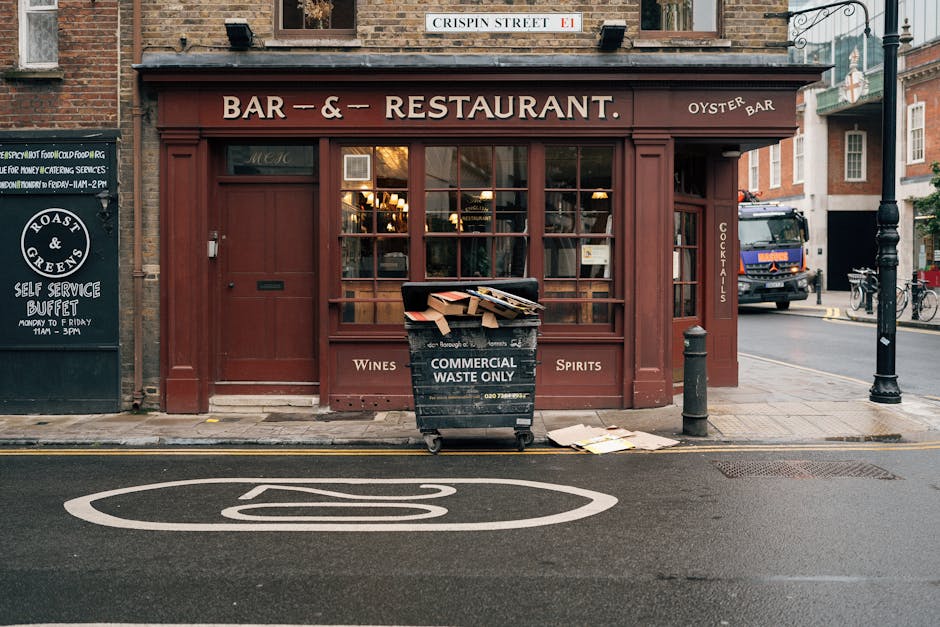
Dalston office rubbish removal for small businesses
Running a small business in Dalston has enough moving parts without old desks, broken chairs, packaging, and outgrown stock piling up in the corner. One week the office feels organised; the next, there's a wobble of cardboard, a dead monitor nobody owns, and a storage cupboard that seems to have become a graveyard for things "we might need later". Dalston office rubbish removal for small businesses is really about getting that mess shifted quickly, safely, and without interrupting the day-to-day work that keeps the lights on.
If you are trying to keep a compact office, studio, co-working room, or back-of-house workspace running smoothly, this guide walks through what office rubbish removal involves, how it works, what to watch out for, and how to choose the right approach. You will also find a practical checklist, a comparison table, and a few plain-English compliance pointers so you can make a sensible decision without overthinking it.
Table of Contents
- Why Dalston office rubbish removal for small businesses Matters
- How Dalston office rubbish removal for small businesses Works
- Key Benefits and Practical Advantages
- Who This Is For and When It Makes Sense
- Step-by-Step Guidance
- Expert Tips for Better Results
- Common Mistakes to Avoid
- Tools, Resources and Recommendations
- Law, Compliance, Standards, or Best Practice
- Options, Methods, or Comparison Table
- Case Study or Real-World Example
- Practical Checklist
- Conclusion
- Frequently Asked Questions
Why Dalston office rubbish removal for small businesses Matters
For small businesses, rubbish is rarely "just rubbish". It gets in the way of work. It eats into floor space, slows cleaning, creates trip hazards, and makes an office feel less calm than it should. In a busy part of East London like Dalston, where space can be tight and every square metre counts, clutter becomes a business problem fairly quickly.
Office waste also tends to be mixed. There may be paper and packaging, but also unwanted furniture, old IT equipment, broken fittings, and renovation leftovers from a recent refresh. Left unmanaged, it can build into a bigger headache than it first looked. And let's face it, nobody wants clients or staff stepping around a stack of collapsed boxes on a Monday morning.
There is also the reputation side of it. A tidy workspace quietly says the business is organised, attentive, and professional. A cluttered one does the opposite. That does not mean you need a showroom-perfect office all the time. It just means rubbish removal should be part of normal business housekeeping, not a panic job every few months.
For small teams, the appeal is straightforward: less disruption, less risk, and less admin. Many businesses also like the fact that a specialist clearance service can handle the awkward items that do not fit into a standard bin collection. If you need to remove multiple office items at once, or clear a room fast before a move, fit-out, or inspection, using a dedicated service is often the cleaner route.
You can also connect office clearance with broader business waste needs through business waste removal, especially if your waste is not limited to one office room and includes regular commercial waste streams too.
Expert takeaway: For small businesses, office rubbish removal is not only about space. It is about maintaining a workable, safer, calmer environment that helps the business function properly.
How Dalston office rubbish removal for small businesses Works
Most office rubbish removal jobs follow a simple flow, even if the actual items are messy or varied. The service begins with an overview of what needs removing, when access is available, and whether anything needs special handling. After that, the crew arrives, loads items safely, and takes them away for sorting, recycling, reuse, or disposal where appropriate.
In practice, the process is often more flexible than people expect. A good team should be able to work around staff, reception hours, shared entrances, narrow stairways, and building rules. In Dalston, where many workplaces sit in converted buildings, mixed-use premises, or compact office units, that flexibility matters.
Typically, the removal team will deal with a mix of:
- office furniture such as desks, chairs, shelves, and cabinets
- packaging waste and cardboard
- paper files that are no longer needed
- small electrical items and office equipment
- miscellaneous clutter from storage rooms
- fit-out leftovers and light refurbishment waste
Some businesses use a service as a one-off clearance, for example before a move. Others need periodic help after a stock rotation, team reorganisation, or office tidy-up. There is no single correct frequency. The right pattern is whatever keeps the workplace usable without creating waste bottlenecks.
If the job includes damaged desks, old filing units, or unwanted seating, it may help to look at related services such as office clearance and furniture disposal, depending on what needs to go and how much of it there is.
One small but useful detail: good removal work is tidy work. You should not be left with loose screws, torn packaging, or a trail of bits across the floor. That sounds obvious, but it is one of those things people only notice when it is done badly.
Key Benefits and Practical Advantages
The biggest benefit is the simplest one: space comes back. Small businesses often underestimate just how much room is being lost to "temporary" storage. A couple of redundant printers, a broken desk, and six half-empty archive boxes can quietly consume a whole corner. Once it is gone, the office breathes again.
There are other advantages too:
- Better productivity: Staff are less distracted when they are not working around clutter.
- Safer walkways: Fewer obstacles means fewer bumps, trips, and awkward lifts.
- Cleaner presentation: Clients, visitors, and contractors see a more professional environment.
- Less internal admin: You do not have to organise transport, labour, and disposal separately.
- More responsible handling: Reusable or recyclable items can be separated instead of dumped together.
There is also a subtle morale effect. A well-cleared office tends to feel lighter. Not in a mystical way, just in a practical way. People notice when the place feels less cramped. The kettle area feels a bit calmer. Meetings are less awkward because there is somewhere to sit that is not beside a pile of old monitor stands.
For businesses that refresh their premises regularly, a good clearance partner can also support sustainability goals. Some items may be suitable for reuse, while others can be broken down into recyclable materials. If environmental handling matters to your business, have a look at recycling and sustainability to understand the kind of approach that should be expected.
Who This Is For and When It Makes Sense
This kind of service suits a broad range of small businesses. It is not only for companies doing a full office move. In fact, many of the most common jobs are smaller and more ordinary than that.
You may need Dalston office rubbish removal if you are:
- replacing office furniture after a rebrand or refit
- clearing storage areas that have become overloaded
- closing or downsizing a workspace
- moving into a new office and leaving the old one tidy
- disposing of broken or obsolete equipment
- preparing for a landlord inspection or end-of-lease handover
- trying to make a small office easier to clean and manage
It can also make sense for businesses that do not have a maintenance team of their own. A two- or three-person company may simply not have the time, vehicle access, or lifting capacity to do the job safely. Truth be told, there is no glory in trying to haul a heavy filing cabinet down a narrow stairwell with one person holding the door open. That is how evenings get ruined.
Start thinking about clearance when waste becomes operationally annoying rather than just visually annoying. If you are having to move items every time you vacuum or if staff keep asking where to put new stock because storage is full, it is probably time.
Step-by-Step Guidance
Here is a practical way to approach office rubbish removal without turning it into a big project.
- Walk the space and list what needs removing. Be specific. "Old office junk" is not enough. Write down desks, chairs, monitors, boxes, shelves, bags, and anything else taking up room.
- Separate what is staying. It sounds basic, but this saves mistakes. Put items you want to keep in a clearly different area before removal day.
- Identify anything sensitive or special. Files, data-bearing devices, batteries, and electrical items may need extra thought. Do not just lump them together.
- Check access. Measure doorways, note parking constraints, and think about lift access, loading points, and building hours.
- Choose the right service scope. A light office tidy-up is not the same as a full strip-out. Be honest about the scale.
- Book a time that disrupts work least. Early morning, lunchtime, or after hours often works well, depending on your building.
- Ask how items will be handled. Reuse, recycling, and disposal routes should be explained clearly enough that you understand what is happening.
- Do a quick final sweep. Once everything is out, check behind cabinets, under desks, and in cupboards. Small forgotten bits always hide there.
If your clearance includes damaged workstations or old seating, the related furniture clearance service can be useful alongside an office job. For businesses dealing with mixed bulky waste, that can simplify the whole process quite a bit.
Expert Tips for Better Results
A few small habits make office rubbish removal much smoother. The first is to sort before the team arrives. Even a loose sort into "keep", "recycle", "remove", and "not sure" speeds things up. It also reduces the chance of accidental disposal, which nobody enjoys.
Second, think about weight and awkwardness, not just volume. A few bulky chairs can be more of a problem than a room full of cardboard. Heavy or awkward items often need different handling, especially in older Dalston buildings with tight turns or stairs.
Third, clear the route. If the team has to navigate through a maze of coat stands, boxes, and trailing cables, everything takes longer and feels more stressful. A ten-minute pre-clear can save a lot of hassle.
Fourth, be clear about time pressure. If you need the room ready for a client visit tomorrow morning, say so. Good planning beats polite guessing every time.
And finally, keep an eye on the small details that create repeated waste. Duplicate stationery orders, over-printed leaflets, broken equipment waiting for "someone to deal with it" - those little things add up. Slowly, but they do add up.
Small tip, but a useful one: if a meeting room has turned into a storage room, start there. It is often the quickest way to make the office feel better fast.
Common Mistakes to Avoid
One common mistake is waiting until the waste becomes an emergency. People often leave clearance until just before a move, inspection, or renewal. Then everything becomes more expensive, more rushed, and more stressful than it needed to be.
Another is assuming that all waste is handled the same way. It is not. Office furniture, paper, electrical items, and mixed junk can require different treatment. A decent service will know how to sort responsibly, but they still need a clear picture of what they are collecting.
Do not forget access issues either. Dalston offices can be hidden inside shared buildings, behind locked doors, above retail units, or down awkward corridors. If you do not mention that early, the job may take longer than expected.
Other easy-to-miss mistakes include:
- failing to remove confidential papers before clearance
- leaving staff to guess what can be thrown away
- not checking what the landlord expects at handover
- mixing reusable items with general waste
- trying to move heavy items without proper lifting support
It is also worth avoiding the "we'll sort it later" approach. Later has a way of becoming next quarter, then next year. Strange how that happens.
Tools, Resources and Recommendations
You do not need a special toolkit to prepare for office rubbish removal, but a few simple resources help. Start with a basic inventory sheet or even a shared spreadsheet if several people are involved. List the item, whether it stays or goes, and any note about access or handling.
Useful practical tools include:
- a tape measure for checking bulky items and door widths
- labels or sticky notes for separating keep and remove piles
- boxes or bags for loose desk waste, paper, and cables
- a camera phone for documenting furniture layouts before and after
- basic gloves for handling dusty or sharp-edged items during sorting
On the service side, it can be worth looking at broader support pages if your needs are mixed. Waste removal is useful when the job includes more than typical office clutter. If furniture is the main issue, furniture disposal may be the better fit. If the job is really a full room reset, then an office clearance approach is usually the most efficient.
For business owners who want to understand the company background, service standards, or operating approach before booking, the about us page and insurance and safety information can give extra peace of mind. That sort of trust signal matters, especially when somebody is moving waste through your workplace.
Law, Compliance, Standards, or Best Practice
Office rubbish removal touches a few areas of UK business best practice, even if your office is tiny. You do not need to become a compliance expert, but you should understand the basics.
First, businesses are expected to manage their waste responsibly. That means not leaving rubbish where it creates hazards, and not handing items to someone who cannot explain how they are handled. You should be comfortable that waste is being moved, sorted, and dealt with in a sensible way.
Second, office waste can include confidential material. Paper files, old hard drives, printed client information, and branded documents should be separated before collection. A quick internal check is usually enough, but it is worth slowing down here. Once sensitive material has gone, there is no easy take-back. That is just life, unfortunately.
Third, health and safety matters. Clear walkways, safe lifting, and sensible access planning are part of good workplace practice. If your team is doing any sorting before collection day, keep the load manageable and avoid lifting heavy items without help.
It also makes sense to look for clear service terms and transparent payment practices. A business should know what is included, what happens if access changes, and how any extra work is handled. For more on that general approach, the pages on terms and conditions and payment and security are relevant from a trust point of view.
Practical rule of thumb: if you would be uncomfortable explaining where the waste goes, or how confidential items are protected, then the process probably needs tightening up before collection day.
Options, Methods, or Comparison Table
Small businesses usually have three realistic ways to deal with office rubbish. Each has its place, but they are not equally convenient for every situation.
| Method | Best for | Advantages | Limitations |
|---|---|---|---|
| DIY disposal | Very small volumes of light waste | Can seem cheaper at first; simple for a few bags | Time-consuming, labour-heavy, awkward for bulky items, and not ideal for mixed waste |
| Regular business waste collection | Routine bin waste and ongoing commercial waste | Useful for repeat rubbish streams and everyday operations | Not suited to large furniture, room clearances, or one-off bulky jobs |
| Specialist office rubbish removal | Mixed office waste, bulky items, and time-sensitive clearances | Fast, practical, and better for compact spaces or larger one-off jobs | Needs a clear brief and good access planning |
For many Dalston small businesses, the third option wins simply because it saves time and reduces faff. If your office is tiny and the waste is large, you do not really want a series of improvised car trips. It is rarely worth the headache.
If your waste includes leftover materials from a small refit or refurbishment, you may also find builders waste clearance relevant, particularly where the office is being altered rather than simply tidied.
Case Study or Real-World Example
Picture a small creative agency in Dalston with six staff, a shared meeting room, and a storage area that had gradually absorbed everything from old leaflets to broken chairs. Nothing dramatic. Just the usual slow creep of clutter. Every time the team needed a new box of paper or a spare chair, someone had to shuffle three other things out of the way first.
They did not need a full strip-out. What they needed was a targeted clearance: two desks no longer in use, four chairs, several broken monitors, packaging from a recent equipment order, and assorted archive items that had no clear home. The problem was not volume alone; it was awkwardness. The office had one narrow stairwell and not much spare room to stage items.
They sorted keep and remove items before the team arrived, labelled the items staying in place, and cleared a route from the storage room to the exit. The removal itself was straightforward. The bigger change happened afterwards. The meeting room was usable again, the office looked more intentional, and the staff stopped using the floor as a temporary shelf. Simple, really, but very effective.
That sort of result is typical when the job is planned with a little care. No drama, no overcomplication. Just the relief of getting the room back.
Practical Checklist
Before your office rubbish removal booking, run through this checklist.
- List all items that need to go
- Separate keep, remove, recycle, and not sure piles
- Remove confidential papers and storage media first
- Check access points, stairs, lifts, and parking options
- Measure large furniture or awkward items if needed
- Tell staff the collection window and what areas will be affected
- Make sure fragile or valuable items are moved aside
- Confirm whether the job includes furniture, electrical items, or mixed waste
- Ask how reuse and recycling are handled
- Do a final walkthrough after collection
If you want a broader overview of related business and property clearances, it can also be useful to review pricing and quotes so you understand how estimates are typically framed before any work begins.
Quick reminder: the cleaner the brief, the smoother the clearance. That one habit saves a surprising amount of time.
Conclusion
Dalston office rubbish removal for small businesses is one of those jobs that pays for itself in calm, space, and usefulness. It keeps the office working properly, reduces day-to-day friction, and helps a small team stay focused on actual business rather than navigating piles of old stuff. Whether you are clearing a single room or making room for a new chapter, the goal is the same: create a workspace that feels manageable again.
Take the time to sort items properly, think about access, and choose a service that understands commercial spaces and mixed waste. Done well, the process is straightforward. Done badly, it becomes another task that drains time you do not really have. To be fair, most small businesses have enough of those already.
If you are ready to make the office feel lighter, tidier, and easier to run, the next step is simple.
Get a free quote today and see how much you can save.
Frequently Asked Questions
What counts as office rubbish in a small business?
Office rubbish can include paper waste, cardboard, broken chairs, old desks, packaging, unwanted shelving, and obsolete equipment. It often includes a mix of light waste and bulky items.
Can office rubbish removal include furniture?
Yes, it often does. Desks, chairs, cabinets, and shelving are common parts of office clearance. If furniture is the main issue, furniture-specific disposal or clearance can help keep the job tidy.
How do I prepare my office before collection day?
Sort items into keep and remove piles, clear access routes, remove confidential documents, and make sure staff know which areas will be affected. A little preparation goes a long way.
Is office rubbish removal suitable for very small offices?
Absolutely. In fact, smaller offices often benefit the most because they feel clutter faster. Even a few unwanted items can make a compact workspace awkward.
What happens to the rubbish after it is collected?
That depends on the item type. Good practice is to separate reusable, recyclable, and general waste so items can be handled appropriately rather than mixed together.
Can I book office rubbish removal if I only have a few items?
Yes. Small jobs are common, especially when a business is replacing a few items, clearing storage, or getting ready for a delivery or inspection.
Do I need to separate confidential papers before a clearance?
Yes, that is strongly advisable. Confidential files and documents should be dealt with separately before any general office rubbish is removed.
How long does a small office clearance usually take?
It depends on access, item size, and how much sorting is done beforehand. A well-prepared small job can be relatively quick, while cluttered or awkward spaces take longer.
What if my office is in a shared building with tricky access?
That is common in Dalston and not usually a problem if it is explained in advance. Stairs, lifts, loading points, and building rules should all be mentioned when arranging the job.
Is office rubbish removal the same as regular business waste collection?
No. Regular business waste collection is better for recurring bin waste. Office rubbish removal is better for one-off clearances, bulky items, mixed waste, and time-sensitive jobs.
How can I keep my office from getting cluttered again?
Set a regular review date, avoid keeping duplicate furniture "just in case", and create a simple storage rule for what can stay. Small habits prevent bigger messes later.
Why choose a specialist service instead of doing it myself?
A specialist service saves time, handles bulky items more safely, and reduces the pressure on your team. For many small businesses, that is the difference between a task and a disruption.
For company information, service expectations, and related support pages, you may also find contact details, the about us page, and the complaints procedure useful when checking confidence and accountability before booking.