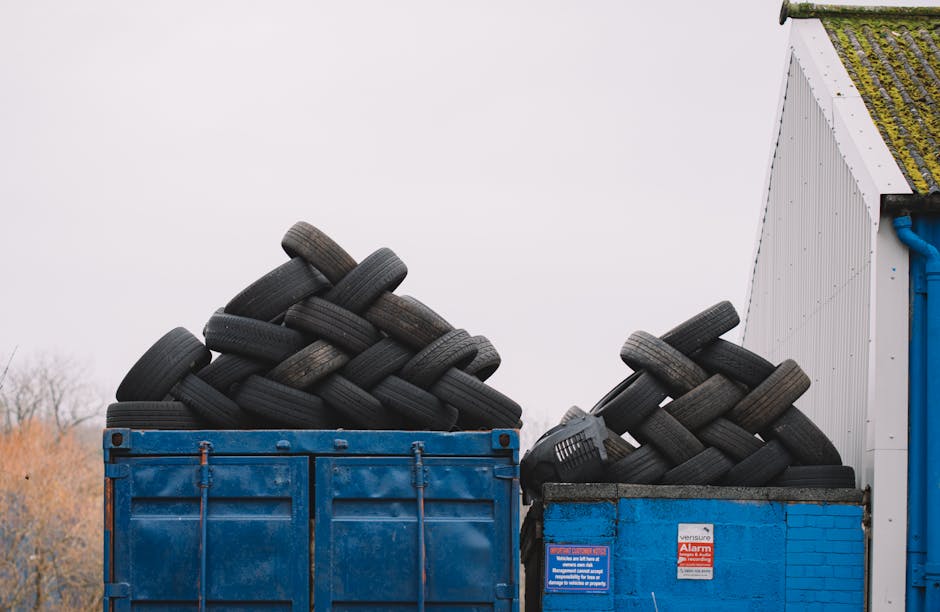
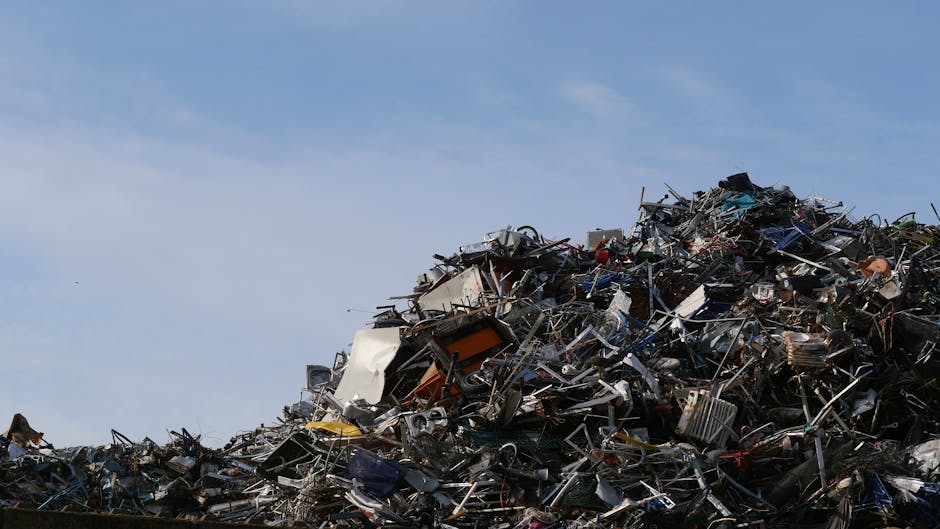
Do I need a permit to dump waste in Dalston Hackney Council?
If you are trying to work out Do I need a permit to dump waste in Dalston Hackney Council, you are not alone. It sounds like a simple question, but in practice it can mean several different things: using a household tip, placing a skip on the road, clearing builders' waste, or arranging a collection from a property in Dalston. The rules are not the same in every situation, and that is where people often get caught out.
The short answer is: sometimes yes, sometimes no. It depends on the type of waste, where it is being left, who is moving it, and whether the waste is going to a licensed disposal route. In this guide, we'll break it down in plain English so you can make the right call without second-guessing yourself.
We'll also look at practical steps, common mistakes, and how to keep things tidy, legal, and a lot less stressful. Let's face it, waste is rarely the exciting part of a project. But getting it wrong can be messy in every sense.
- Understand when a permit is needed and when it is not
- Learn the difference between council permission and disposal compliance
- See how waste type affects the process
- Find practical next steps for homes, landlords, trades, and businesses
Expert summary: In Dalston, the key question is not only "can I dump this waste?" but also "is this the correct place, method, and licence route for it?" If you are unsure, check the arrangement before the waste leaves your property. That one pause can save a lot of hassle later.
Table of Contents
- Why permit rules matter in Dalston
- How waste permits and disposal rules work
- Key benefits and practical advantages
- Who this is for and when it makes sense
- Step-by-step guidance
- Expert tips for better results
- Common mistakes to avoid
- Tools, resources and recommendations
- Law, compliance, standards and best practice
- Options, methods and comparison
- Case study or real-world example
- Practical checklist
- Conclusion
- Frequently asked questions
Why Do I need a permit to dump waste in Dalston Hackney Council Matters
Waste rules matter because they protect you from avoidable fines, fly-tipping problems, unsafe disposal, and the very annoying situation where a skip or load is refused at the last minute. In a dense London area like Dalston, space is tight, road access is shared, and local enforcement tends to be more visible than people expect. A small mistake on paper can quickly become a large inconvenience on the street.
There are two common misunderstandings here. First, people often assume that if the waste is theirs, they can place or move it however they like. Second, they assume a "permit" means the same thing in every case. It does not. A permit might relate to placing a skip on the public highway, while legal disposal itself depends on using an authorised waste route. Those are related, but they are not identical.
For example, if you are clearing a flat after a move and the pile of waste is sitting on a pavement for collection, that can create issues. If you are ordering a skip for building rubble, the skip may need highway permission. If you are loading a van for a private waste removal service, the critical point is whether the waste is handled and transferred properly, not whether you have a council permit in your pocket.
In other words, the word "dump" can be misleading. Most responsible disposal is not about dumping at all. It is about transfer, collection, sorting, and legal onward handling. That distinction is where good planning starts.
Dalston residents also deal with mixed waste streams all the time: cardboard, broken furniture, garden cuttings, renovation offcuts, and old white goods. When these are separated properly, disposal is usually smoother. When they are bundled together in a rush, things get complicated fast. Not impossible. Just more annoying.
How Do I need a permit to dump waste in Dalston Hackney Council Works
The exact process depends on what you mean by "dump waste." Here is the simplest way to think about it:
- If you are leaving waste on public land, such as the road or pavement, you may need permission for that occupation, especially for a skip or similar container.
- If you are disposing of waste at a licensed site, the main issue is whether the site accepts that material and whether the waste is brought there lawfully.
- If you are using a waste carrier, they should transport the waste responsibly and take it to an appropriate facility.
- If you are generating trade waste, such as builders' debris or office clear-out material, you may have extra documentation and handling expectations.
A permit is usually about where something is placed or how it affects public space. A lawful waste route is about where the waste ends up and who is responsible for it during transfer. So if your question is really, "Can I just put this waste outside and get rid of it later?" the answer is usually no, not without checking the proper permissions.
Here's a realistic example. A homeowner in Dalston is replacing a kitchen. Old cabinets, tiles, and packaging build up quickly. If everything is loaded into a skip on private land, permit issues may be minimal. If the skip has to sit on the road, the placement may need permission. If the waste is removed by a clearance team, the operator should handle the transport and disposal route. Same job, different compliance path.
Another point worth stressing: councils and enforcement bodies care about public safety and nuisance. A half-blocked road, loose rubble, or waste stacked by a kerb is not just untidy; it can create pedestrian and traffic hazards. That is why the practical side and the legal side go hand in hand.
Key Benefits and Practical Advantages
Getting the permit question right early has a few very real benefits. Some are obvious, others only become obvious when something goes wrong.
- Fewer delays: You avoid last-minute hold-ups if the skip, loading bay, or collection point needs permission.
- Lower risk of penalties: Following the proper route reduces the chance of enforcement action or complaints.
- Better site safety: Correct placement and handling keep footpaths, entrances, and driveways clearer.
- Smoother planning: You can book labour, access, and collection at the right time.
- Less stress: There is something deeply calming about knowing the waste is being dealt with properly. Honestly, it helps.
For businesses and landlords, there is another advantage: consistency. A repeatable process for waste removal makes it easier to manage refurbishments, tenant voids, office moves, and garden clearances without scrambling each time. If you run a property or facilities operation, that consistency really matters.
There is also a reputational benefit. Neighbours notice when waste is left responsibly and cleared promptly. In a busy neighbourhood, that goes a long way. Nobody enjoys being the building with a rusting fridge, a sagging pile of black bags, and three apologetic messages from the contractor.
Who This Is For and When It Makes Sense
This question comes up for all kinds of people, and the answer can vary based on the situation.
- Homeowners clearing out furniture, old appliances, or renovation waste
- Renters moving out and dealing with leftover household items
- Landlords and letting agents managing flat clearances or end-of-tenancy rubbish
- Tradespeople dealing with rubble, timber, plasterboard, packaging, and site debris
- Small businesses removing office furniture, stock, or commercial refuse
- Garden owners handling soil, branches, hedge cuttings, and green waste
It makes sense to think about permits and disposal arrangements any time the waste is not simply going into your household bin. If the load is bulky, mixed, heavy, or likely to sit outside for a while, you should slow down and check what is needed. That applies whether you are clearing a loft, a garage, or a shop unit.
If you are dealing with a property clearance, services such as house clearance, flat clearance, loft clearance, and garage clearance can be especially useful because they reduce the chance of waste sitting around while you figure out the next step.
For commercial or work-related waste, the picture gets more technical. If you are dealing with construction debris, for instance, builders waste clearance is usually a better fit than a general household solution. For businesses, business waste removal is often the more sensible route because it is aligned with ongoing commercial waste handling rather than one-off domestic disposal.
Step-by-Step Guidance
If you want a clean answer without the waffle, use this process.
- Identify the waste type. Is it household rubbish, furniture, garden waste, builders' debris, or business material?
- Decide where the waste will go. Private property, road, pavement, communal area, or direct collection into a vehicle?
- Check whether you need permission for placement. This is especially relevant for skips or anything occupying the public highway.
- Confirm who is carrying the responsibility. If you hire a clearance company, ask how the load will be handled and disposed of.
- Separate reusable or recyclable items. It often makes disposal simpler and more cost-effective.
- Book the removal or permit in time. A lot of trouble starts because people leave this until the day before. Classic.
- Keep the site tidy until collection. Bag loose waste, keep paths open, and avoid stacking items where they might blow, leak, or collapse.
If you are comparing service options, look carefully at the detail. A general waste removal service may suit mixed domestic waste, while furniture disposal may be the better choice for bulky household items that are hard to move on your own.
For garden work, the same logic applies. A proper garden clearance can be much easier than trying to bundle green waste into several separate bin collections. It also helps prevent waste being left at the front of the property for days, which nobody wants to see on a damp Tuesday morning.
Expert Tips for Better Results
In our experience, most waste headaches are preventable with a bit of planning. Here are the small things that make a big difference.
- Measure access before booking. Dalston streets, side alleys, and shared entrances can be tighter than they look on a phone screen.
- Sort waste early. Keep wood, metal, green waste, and general junk apart if you can. It speeds everything up.
- Photograph the load. Not for drama, just for clarity. A quick photo can help avoid misunderstandings about volume and type.
- Ask about licensing and handling. A trustworthy operator should be able to explain how the waste will be taken away and processed.
- Check if you need to protect flooring or lifts. Especially in flats and offices, a few sheets or covers can save a lot of mess.
One underrated tip: plan for the awkward item first. The sofa that will not fit around the stairwell, the broken wardrobe with sharp edges, the garden shed panel that flexes in the wind. Sort those out before the easy bags, because they are usually what causes delays.
If a job involves fragile surfaces, shared hallways, or busy office space, a service like office clearance or one of the home-based clearance options can help keep everything orderly. A tidy process is not just about appearance. It is about reducing risk.
Common Mistakes to Avoid
This is where people often trip up, sometimes literally.
- Assuming every disposal method needs the same permit. It does not.
- Leaving waste on the pavement "just for a bit." A bit can become a complaint very quickly.
- Mixing different waste types without checking acceptance rules. Some items need special handling.
- Using an unverified collector. If the waste is passed to the wrong person, the original holder can still face problems.
- Forgetting access issues. A collection team may not be able to reach the waste if cars, bins, or planters are blocking the route.
- Booking too late. That "we'll sort it tomorrow" approach is rarely a good look.
Another mistake is underestimating how quickly waste expands. One broken chest of drawers becomes two bags of screws, one pile of splintered timber, and a mystery drawer full of cables. It happens. Always.
For bigger clearances, it is often better to arrange the right service at the start rather than trying to patch things together. A planned approach saves time, and usually money too.
Tools, Resources and Recommendations
You do not need a complicated toolkit to handle waste properly, but a few simple tools help a lot.
- Heavy-duty sacks or bins for loose waste and smaller items
- Gloves and sturdy footwear for handling sharp or dirty materials
- Tape measure to check access routes, vehicle width, and item dimensions
- Labels or markers to separate keep, recycle, and remove piles
- Phone camera for documenting the load before collection
From a service perspective, it helps to use pages that match the job rather than forcing a one-size-fits-all solution. For example, furniture clearance can be a neat fit for bulky household items, while furniture disposal works well when the main issue is getting old pieces out of the way responsibly.
If the project is more property-wide, home clearance and house clearance are good options to consider because they help organise the whole process instead of handling items piecemeal. That can be especially helpful during bereavement, downsizing, or a rapid move. These are never easy moments, so anything that reduces friction is welcome.
It is also worth looking at the company's wider standards. Pages such as recycling and sustainability, health and safety policy, and insurance and safety can give you a better sense of how seriously a provider treats the job. That matters more than people think.
Law, Compliance, Standards, or Best Practice
While the exact permission you need depends on the waste type and placement, the broader compliance picture is usually straightforward: do not obstruct public space without permission, do not pass waste to the wrong person, and do not assume that a quick disposal is the same as a lawful disposal.
In UK waste practice, a few principles are especially important:
- Duty of care: waste should be handled responsibly from the point it leaves your control.
- Appropriate transfer: waste should only be given to someone who is authorised and able to deal with it properly.
- Safe storage and movement: waste should not create hazards for pedestrians, neighbours, workers, or traffic.
- Correct segregation where practical: separating recyclable or hazardous items helps avoid mistakes.
For commercial users, the expectations are usually tighter because trade waste, mixed construction waste, and office clear-outs tend to involve more volume and a wider variety of materials. Even a small office move can produce a surprising amount of packaging, filing, electronics, and old furniture. It fills a room before you know it.
The safest approach is simple: if the waste is unusual, bulky, or likely to go outside the boundary of your property before collection, check the placement and transfer requirements first. If it is a straightforward household clearance, confirm the handling route and collection timing. Best practice is really about reducing uncertainty.
Options, Methods, or Comparison Table
Here is a practical comparison of common ways people deal with waste in Dalston. The "best" choice depends on space, volume, urgency, and how much sorting you want to do yourself.
| Method | Best for | Permit likely needed? | Main advantage | Watch out for |
|---|---|---|---|---|
| Skip on private property | House clearances, small renovations, bulky mixed loads | Usually no, if fully on private land | Convenient and flexible | Space requirements and access |
| Skip on public highway | Sites without driveways or yards | Often yes | Useful where access is limited | Permission, safety, and parking impact |
| Man and van waste removal | Fast domestic or light commercial clear-outs | Usually not for the vehicle itself | Quick and less intrusive | Make sure disposal is lawful |
| Specialist clearance service | Furniture, office, garage, loft, or garden waste | Depends on how waste is staged | Good for sorting, lifting, and transport | Confirm exactly what is included |
| Self-haul to disposal route | People with a suitable vehicle and time | Not usually a permit issue, but handling rules still apply | Full control | Time, loading effort, and compliance |
For many Dalston households, a specialist clearance route is the least stressful option because it avoids the awkward bits: lifting, sorting, parking complications, and the endless "where do we put this for now?" question. And that question, to be fair, is often half the battle.
Case Study or Real-World Example
A typical Dalston scenario goes like this. A couple is moving out of a first-floor flat after years of living there. They have a sofa that will not fit through the stairwell properly, a few bags of mixed household rubbish, some broken shelving, and an old mattress that has seen better days. The building has shared access, neighbours are coming and going, and the front pavement is not exactly roomy.
They first wonder whether they need a permit to dump the waste. The real issue turns out to be broader: where can the waste be placed, how will it be removed, and who is responsible for taking it away? In this case, putting items outside for an extended period would be awkward and potentially problematic. A planned clearance solves that by removing the waste in one visit, keeping the communal space clear, and avoiding uncertainty about street placement.
Now imagine a different scenario: a small shop refit with cardboard, shelving, packaging, and a few old display units. Here, the main concern is not just where the waste sits, but whether the business is using the right waste handling arrangement. A proper commercial route helps keep the refit moving while reducing mess in the doorway and back lane.
Both examples show the same thing. The permit question matters, yes, but the better question is often: what is the cleanest lawful route for this exact waste in this exact place? Once you ask it that way, decisions get easier.
Practical Checklist
Use this before you book or move anything.
- Have you identified the exact waste type?
- Will any part of the waste sit on a road, pavement, or shared area?
- Do you need permission for a skip or container?
- Is the waste going to a licensed and suitable disposal route?
- Have you separated recyclable, reusable, and general waste where practical?
- Is access clear for lifting or collection?
- Have you checked whether there are bulky, sharp, or awkward items?
- Do you know who is responsible for the waste once it leaves your property?
- Have you chosen a service that matches the job size and material type?
- Are you keeping communal areas, pavements, and neighbours in mind?
If your answer to any of those is "not quite," pause and sort that out first. It is much easier to spend ten minutes checking than ten days undoing a mistake.
Get a free quote today and see how much you can save.
Conclusion
So, do you need a permit to dump waste in Dalston Hackney Council? Sometimes you do, sometimes you do not. The real answer depends on whether you are placing waste on public land, what type of waste it is, and how it will be collected and disposed of. That may sound a bit cautious, but it is the honest answer. Waste compliance is like that sometimes.
If you are dealing with a small household clear-out, the process can be quite straightforward. If you are handling bulky furniture, builders' waste, garden material, or commercial rubbish, it is worth being more deliberate. A sensible plan, the right service, and a quick check on placement and disposal rules can save you time, money, and a fair bit of grief.
When in doubt, choose the route that keeps the space safe, the paperwork sensible, and the waste moving properly. That is usually the best outcome for everyone involved. And once it is gone, the room feels lighter somehow. Cleaner. Easier to breathe in.
Frequently Asked Questions
Do I need a permit to leave waste on the pavement in Dalston?
Usually you should not leave waste on the pavement without checking first. If the waste is occupying public space, permission may be needed, especially for larger items or containers. The safer approach is to treat pavements and roads as controlled spaces, not temporary storage.
Do I need a permit for a skip outside my property?
If the skip is fully on private land, a permit may not be needed. If it has to sit on the road or another public area, permission is commonly required. The key detail is where the skip is physically placed.
Is "dumping waste" the same as arranging waste removal?
No. Dumping waste is a vague phrase, and it can imply illegal or careless disposal. Waste removal means the material is collected and handled through a proper route. The difference matters a lot in practice.
What if I am only getting rid of a few bulky items?
A few bulky items may not need a permit, but they still need to be removed responsibly. Furniture, mattresses, and appliances are often easier to deal with through a dedicated clearance or disposal service than by leaving them outside.
Do trade waste and household waste follow the same rules?
Not always. Trade waste, builders' waste, and business clear-outs often need more careful handling because they can involve different materials and larger volumes. Household waste is usually simpler, but it still has to be dealt with properly.
Can I use a private van instead of a permit?
Using a van may avoid the need for a skip permit, but it does not remove the need to dispose of waste legally. The transport method is only one part of the process. The waste still needs to go somewhere appropriate.
What is the biggest mistake people make?
The biggest mistake is assuming the waste can simply be left somewhere "for now." That can create parking issues, complaints, safety risks, and compliance problems. A quick plan is usually all it takes to avoid that.
How do I know if my waste collector is trustworthy?
Look for clear explanations of how the waste is removed, handled, and processed. Useful trust signals include transparent service pages, safety information, insurance details, and clear terms. If you want to learn more about how a provider works, the about us page is often a good place to start.
What should I do with mixed garden and household waste?
If the waste includes cuttings, soil, pots, old furniture, and general junk, sort it as much as practical before collection. Mixed loads are common, but they are easier to manage when the waste is grouped sensibly. A dedicated garden clearance can help when the outdoor waste has piled up.
Is there a difference between clearance and disposal?
Yes. Clearance is the physical process of removing the items. Disposal is what happens after the waste is collected. Good providers make both parts clear so you know the waste is handled responsibly from start to finish.
What should I do if I am still unsure?
If the situation is borderline, check the placement, access, and waste type before moving anything. If needed, use a service that can handle the whole job rather than leaving it to guesswork. That is usually the calmest and cleanest route.
For more details on service standards and practical arrangements, you can also review pricing and quotes and the company's terms and conditions. If you want to ask something specific, the safest next step is to reach out through the site's contact options. Small questions now save larger problems later, which is not a bad trade at all.